
Connectivity that's
secure by default
See, control, and prevent threats ahead of time thanks to security enforced at the network layer, not bolted onto devices afterwards.
The critical risks you face when connecting IoT devices:

-
Public APNs route your traffic across the open internet. This exposes device data to interception, rerouting, and manipulation through insecure paths such as BGP hijacks.
-
You need real time visibility into how your IoT data moves. Without it, unknown IPs, abnormal usage spikes, and unauthorized device behaviour go undetected and become security risks.
-
Cross border connections often send your data through regions with different security and privacy rules. If these routes are unprotected, they can violate local regulations and create compliance exposure.
-
Your SIMs act as network credentials. If they are removed, copied, or used in other devices, attackers can generate unauthorized traffic.
So, how is emnify's connectivity 'secure by default’?
You need security built into your connectivity, not bolted on at the device or application like most traditional operators. emnify makes this possible by leveraging capabilities via our cloud native core that keep every connection protected, visible, and controlled by design.
01
Gain full visibility of every device, flow, and event
See everything
You cannot secure what you cannot see
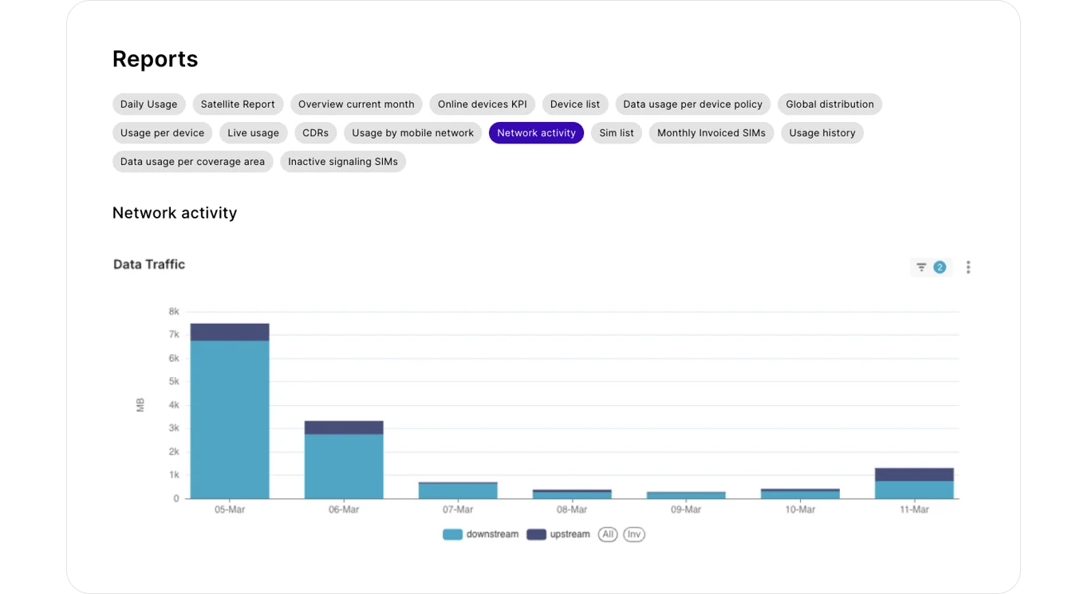
emnify gives you continuous, visibility into how every device connects, communicates and behaves across networks and regions.
What visibility you will have
Real time insight into every device and connection
emnify’s Data Streamer delivers real-time connectivity events and traffic metadata directly into your own systems via API, or into the Events Centre. Events include, roaming charges and traffic metadata such as domains, IP endpoints and volumes.
Full visibility of where your traffic goes
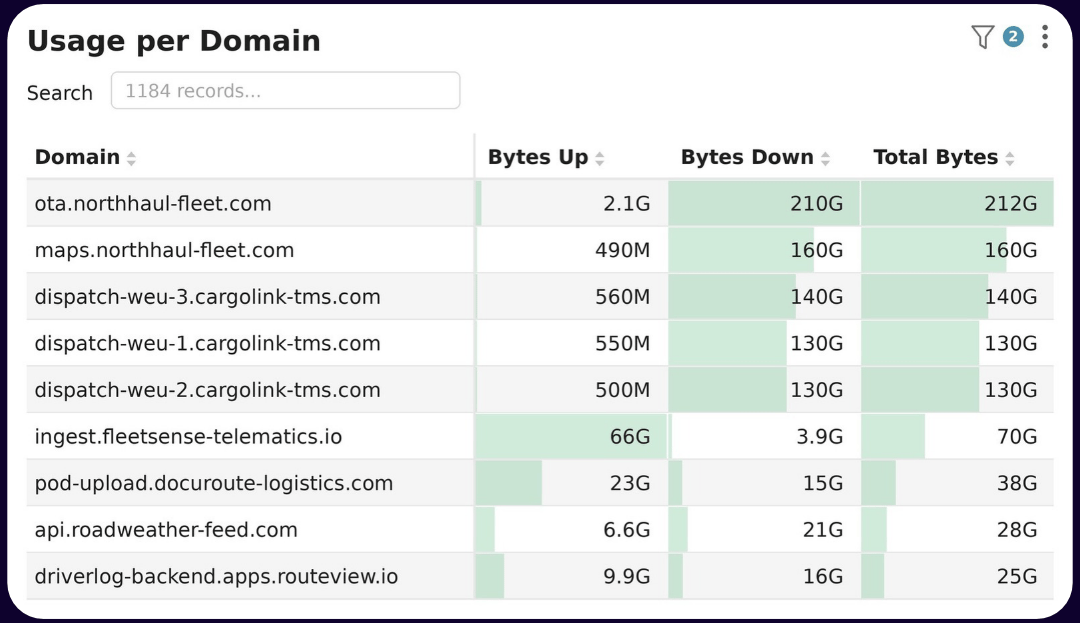
Spot unknown destinations and usage outliers without writing a query. Flow Logs show, fleet-wide and per device, which domains your devices resolve and which IPs they connect to, over which port and protocol, and how much data they exchange, in near real-time.
Deep diagnostics when something looks suspicious
Packet Capture gives you full packet payloads for advanced troubleshooting. Use it to analyse protocol behaviour, MTU issues, or security anomalies when you need deep investigation.
Trace a spike to its source
Flow Logs break traffic down by device, destination, port and volume, so you can see which device is behind a jump in usage.
How this helps your operations:
This visibility helps you spot suspicious behaviour quickly , understand where traffic is going, detect unexpected destinations, and investigate issues without relying on operators.
02
Enforce exactly how, where, and what your devices connect to
Control everything
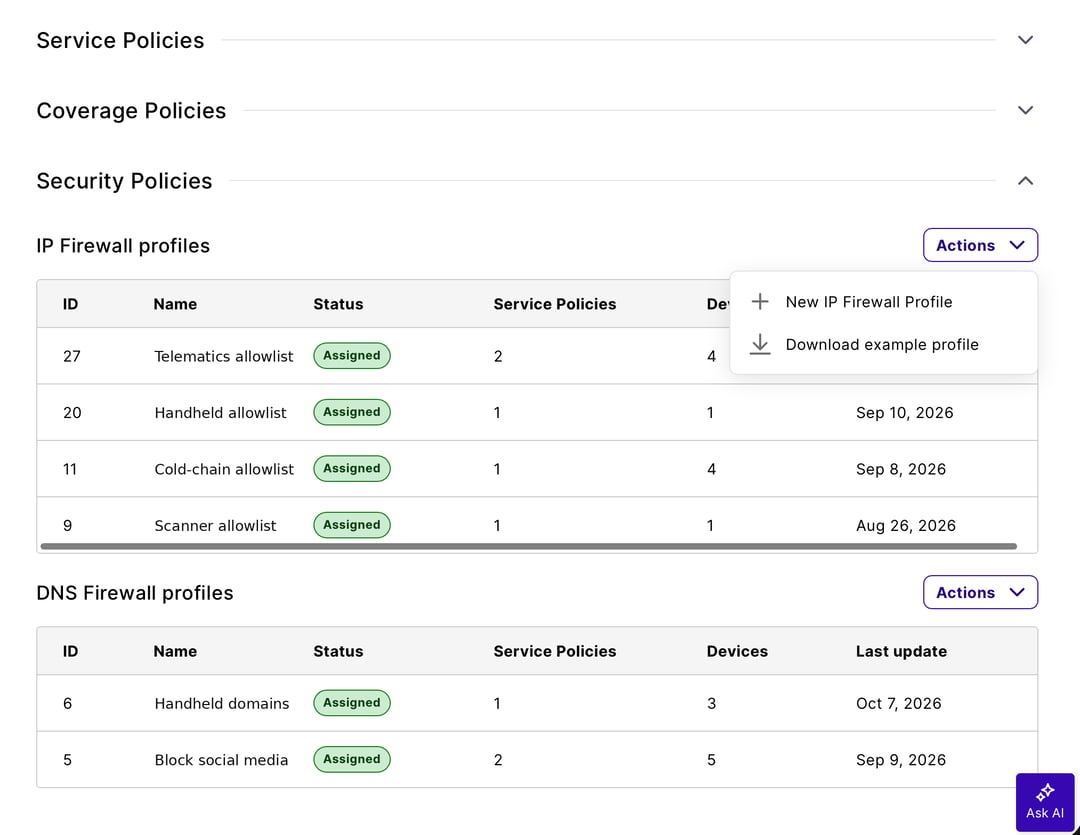
All device policies in one place
Service and Coverage Policies define what devices may do and where they connect. Firewall profiles add two layers on top: IP Firewall allows only approved backends, and DNS Firewall allows or blocks domains.
How you can do it:
Configure policies that govern what devices can and can’t do
Set precise rules that control which networks a SIM can attach to, which regions it can operate in, and how much data or SMS it can consume.
Control how your data moves
Control the path your device traffic takes after it leaves the network with Cloud Connect. Device data is routed through private, cloud to cloud connections such as IPsec VPN, AWS Transit Gateway, or OpenVPN directly into your environment, instead of traversing the public internet.
Prevent direct access to your devices
With a private IP address space, your devices are never assigned public, internet routable IP addresses. They cannot be scanned, discovered, or accessed directly from the internet, and are only reachable through controlled, private connections you define.
Control which services your devices can communicate with
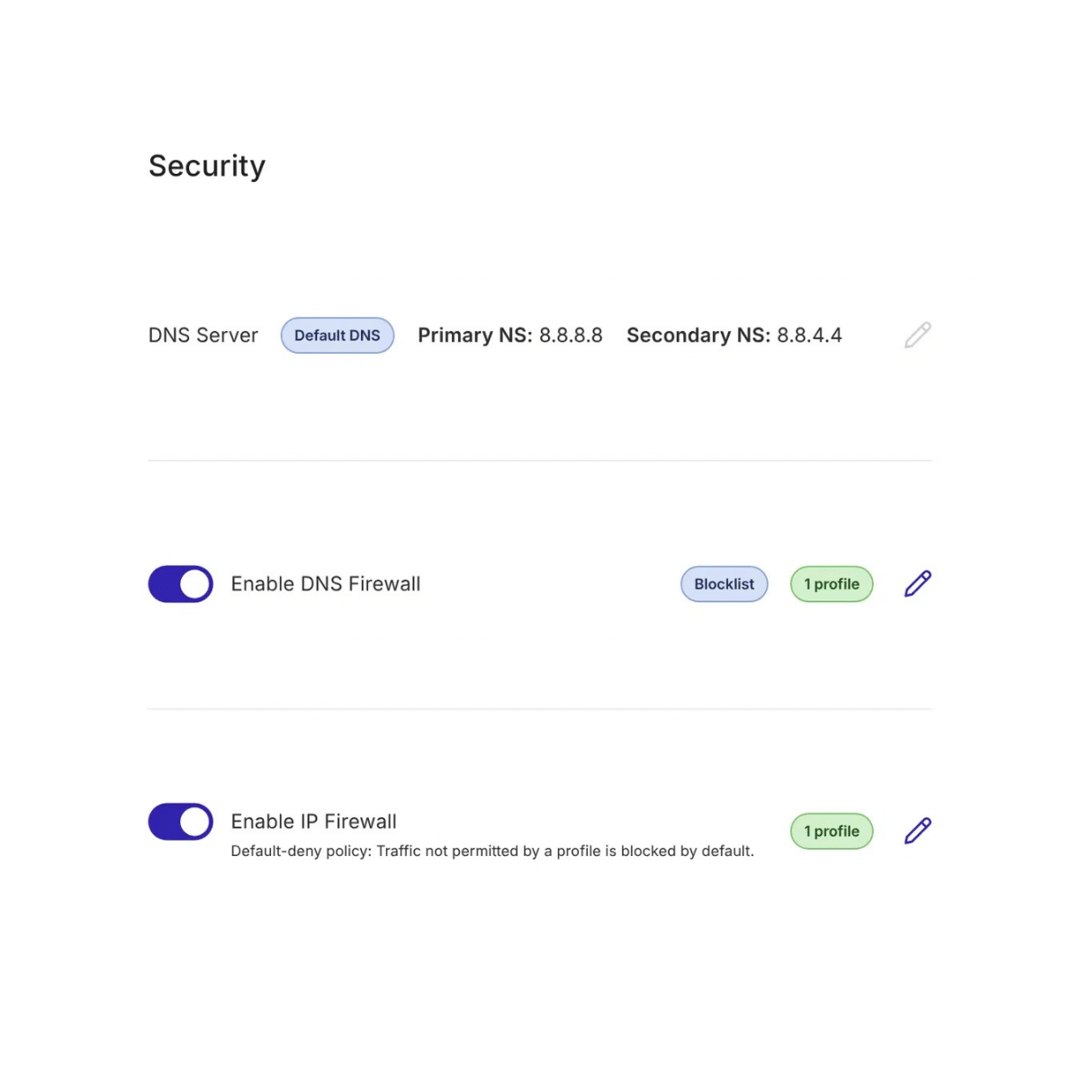
DNS Firewall blocks unapproved domains before a connection starts. IP Firewall blocks direct connections to unapproved IPs, so DNS rules can't be bypassed. Both support deny by default and work while roaming, with no firmware change.
Control who can access and operate your connectivity platform
Use SSO, Workspaces and custom user roles, and audit logs to ensure only authorised users can manage SIMs, routing, and policies, with full traceability across teams.
Ensure SIMs only work in approved hardware
With IMEI Lock, each SIM is bound to a specific device. If a SIM is removed or inserted into different hardware, connection attempts are blocked automatically.
Security you can account for
DNS Firewall keeps devices off risky domains, SSO and Role-based access control (RBAC) limit each person to the access they need, and audit logs keep a record of changes.
How this secures your operations:
Together, these controls let you strictly govern device behaviour, data paths, and access at every level. They prevent SIM misuse, block unauthorised destinations, reduce attack surface, and ensure connectivity behaves exactly as intended across your deployment.
03
Remove attack paths by design and stop incidents automatically
Prevent everything
Security is strongest when attack paths are removed, not just monitored. emnify’s network architecture eliminates common IoT attack vectors and compliance failure modes by design.
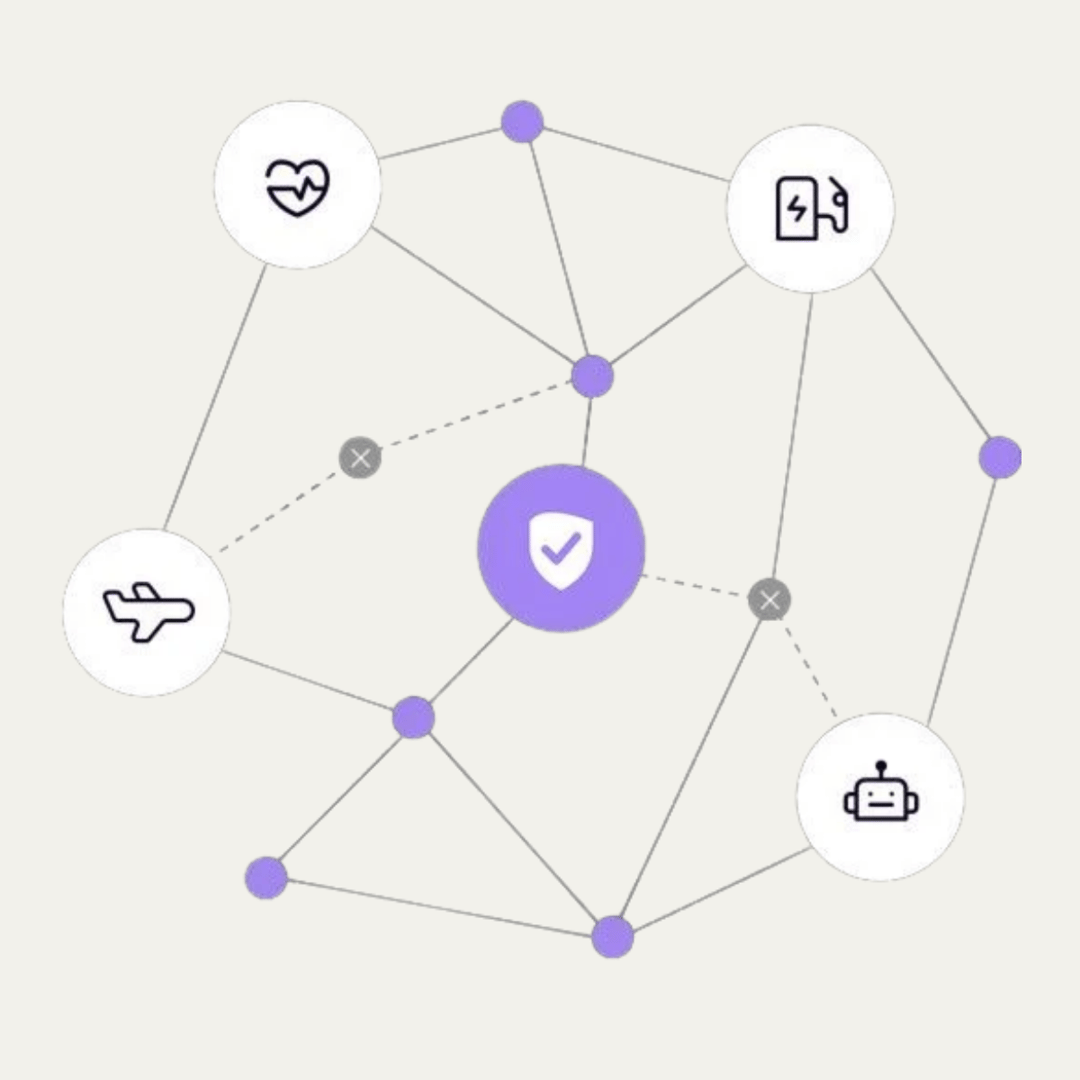
How emnify prevents threats to your devices:
Your devices cannot be exposed to the public internet
With a private IP address space, your devices are never assigned public, internet routable IP addresses. They cannot be scanned, discovered, or accessed directly from the internet, and are only reachable through controlled, private connections you define.
Your data cannot be intercepted in transit
Device traffic stays on private paths instead of the public internet, which removes interception risks such as BGP hijacks and passive eavesdropping.
SIMs cannot be reused or abused in unauthorised hardware
SIM identities are enforced at the network layer. If a SIM is removed, copied, or inserted into different hardware, it will not attach. SIM misuse cannot escalate into a security or compliance incident.
Your data cannot unintentionally leave approved regions
Traffic does not accidentally exit allowed jurisdictions. Regional breakouts keep traffic inside the regions you choose, preventing data residency violations caused by misrouting or roaming.
Incidents cannot spread across your deployment
Devices are isolated by default. Device-to-device traffic flows only where you explicitly allow it, so a compromised device stays contained.
Act when patterns emerge
When a device crosses a usage threshold you set, Smart Events fire and Automation acts: switch the device policy or call your webhook. Next, Flow Logs patterns such as new destinations will trigger the same actions, including DNS and IP Firewall updates. The emnify AI Agent reads your flow data and explains it in plain language.
How this secures your operations:
By enforcing security at the network layer, emnify prevents exposure, interception, misuse, and compliance violations before they can occur. Risks are eliminated structurally, not detected after the damage is done, and any compromise is isolated to a single device.
Ready to make security your default?
Join IoT leaders trusting emnify for always connected, always protected deployments. Contact us to discuss how our cloud-native network transforms your IoT security.